Pages

.

Showing posts with label Recipes: Soups. Show all posts

Roasted pumpkin soup with almonds and spicy dukkah oil a la Silvena Rowe

IMG_8296.jpg

From the recipe archives, originally posted in October 2011. Totally worth making!!! 
PS Check the comments section - Silvena Rowe herself left a comment - how cool is that!?

I spotted this soup recipe in Silvena Rowe's beautiful Orient Express: Fast food from the eastern Mediterranean, one of my recent cookbook acquisitions. I've been making various pumpkin soups and certainly wasn't looking for a new soup recipe, but this one caught my eye because of almonds. There are almonds both inside the soup and in the dukkah-mixture (Not sure what dukkah is? You can read more about it here). We cooked four recipes from Silvena's book last Sunday (see the menu below, scribbled on our newly painted kitchen wall), and the soup was very well received. The almonds add a thickness and a lovely texture to the soup, the dark red pomegranate seeds are a true eye candy, and the dukkah oil is a wonderful flavour enhancer. I more or less followed the recipe, though I used a bit more pumpkin and less chicken stock, and used some coriander/cilantro for garnish.

IMG_8284.jpg

You can either use any orange-fleshed winter squash here - butternut squash or a Hokkaido pumpkin (potimarron in French). Well, you could use any winter squash, but orange-fleshed one looks prettiest :)

More pumpkin soup recipes @ Nami-Nami:
Pumpkin soup with nutmeg
Pumpkin soup with thyme
Estonian pumpkin and semolina soup

Roasted pumpkin/butternut squash soup with dukkah
(Röstitud kõrvitsa supp mandlite ja vürtsiõliga)
Serves six

IMG_8291.jpg

For the dukkah oil:
50 g while almonds
1 Tbsp coriander seeds
0.5 Tbsp cumin seeds
0.25 Tbsp fennel seeds
5-6 Tbsp olive oil

For the soup:
1.2 kg orange-fleshed pumpkin or squash
8 fresh sage leaves, chopped
2 onions, peeled and quartered
6 garlic cloves, peeled
4 Tbsp olive oil
750 ml chicken stock (3 cups)
100 g ground almonds
sea salt and freshly ground black pepper

To serve:
pomegranate seeds
fresh coriander/cilantro leaves

Preheat the oven to 180 C/350 F.

Peel the pumpkin, remove the seeds and cut the flesh into 2-3 cm (1 inch) chunks. Place onto a large roasting tray alongside the onion quarters, garlic cloves and chopped sage leaves. Season to taste with salt and pepper, drizzle with olive oil:

IMG_8271.jpg

Cook the vegetables in the preheated oven for 30-40 minutes, until the pumpkin is soft. Remove from the oven and cool.

Make the dukkah oil while the pumpkin is roasting. Place the spices and almonds onto a small dry frying pan and cook over a moderate heat until fragrant and slightly golden (keep an eye on them, as the spices burn easily!):

IMG_8277.jpg

Using a pestle and mortar (or a small food processor), bruise the spices and almonds until you've got a coarsely ground mixture. Add the oil, put aside.

When the vegetables are cooked, place them into a food processor or a blender. Blend to a purée, adding a little of the vegetable stock if necessary. Return the pumpkin purée into the saucepan, add the rest of the stock. Bring into a slow boil, then simmer for 15-20 minutes, until the soup is smooth and slightly thickened. Stir in the almonds, season to taste.

To serve, ladle the soup into warmed bowls. Spoon some dukkah oil on top, sprinkle with pomegranate seeds and garnish with some cilantro/coriander.

IMG_8289.jpg
reade more... Résuméabuiyad

Estonian recipes: yellow split pea soup with smoked pork (hernesupp suitsulihaga)

Originally posted in February 2012, slightly edited.
Estonian split pea soup with smoked ham / Hernesupp

It's Shrove Tuesday tomorrow, and before feasting on delicious Lenten buns (I've blogged about the classic ones, chocolate ones and luscious raspberry and marzipan ones), Estonians eat split pea soup. Thick, hearty, well-flavoured (smoked pork!) and textured (peas + pearl barley) - all the elements of a substantial and delicious winter soup are present. Here's a recipe that I've been using for years to make a big (I mean it!) pot of delicious soup.

It's a fusion recipe, of a kind. You see - apparently in the Southern Estonia, they used to put barley in the split pea soup; in the North, they replaced the pearl barley with cubed carrots and potatoes. I use them all, so it's a meet-me-in-the-middle soup :)

Note that the soup reheats very well. As it thickens when cooling, you may need to add some water when reheating it, and adjusting the seasoning again, if necessary. 

Estonian Yellow Split Pea Soup with Smoked Pork
(Hernesupp suitsulihaga)
Serves eight to ten

Split pea soup with smoked pork rib / Hernesupp suitsuribiga

200 g yellow split peas
150 g pearl barley
3 litres of water
about 1 kg of smoked pork - rib, cheek or hock
1 large onion
2 to 3 large carrots
2 large potatoes
salt to taste
2 to 3 tsp sharp mustard (or to taste)
fresh herbs (parsley, celery, dill, thyme, savory)

ON THE PREVIOUS NIGHT OR IN THE MORNING:
Pick through the peas and pearl barley to remove any grit. Place into a bowl, pour over enough cold water to cover by couple of centimetres and leave to soak. (This reduces the cooking time considerably).

ON THE DAY:
Place the smoked pork into a large bowl (definitely larger than 5 litres!). Add the 3 litres of water and bring slowly into a boil. Remove any froth and scum that appears on the surface.
Rinse the soaked barley and peas, drain and add to the saucepan. Bring to a boil again, then reduce heat, cover with a lid and simmer gently for about an hour.
Meanwhile, peel and chop (or grate coarsely) the onion, carrots and potatoes. If you wish, you can sauté the onion and carrots in some oil - this enhances the flavour.
Add the vegetables to the soup and continue simmering for about half an hour, until the meat and vegetables are fully cooked.
Take the pork out of the soup, remove the meat from the bones and chop finely. Return the chopped meat into the saucepan.
Season the soup with mustard and salt, add some herbs of your choice and serve.
reade more... Résuméabuiyad

Scottish food: Cock-a-Leekie soup

Originally posted in February 2007; fully updated in January 2013. Cock-a-leekie soup / Kana-porrusupp

Photo by Juta Kübarsepp for the January 2013 issue of Kodu ja Aed. Recipe and styling by Nami-Nami. The tablecloth is Estonian national tartan - the blue, black and white representing the Estonian flag, the red and golden representing Scotland's Rampant Lion. 

Tomorrow the friends of Scotland and all things Scottish across the world celebrate Robert Burns' birth anniversary, hosting or attending a Burns Supper. And any self-respecting Burns Supper begins with a proper Scottish soup - either Scotch Broth or Cock-a-Leekie. As the latter is a) considerably cheaper and b) considerably easier, and something that I've cooked over and over again. Amazingly, so few ingredients (a chicken, some leeks and some juicy prunes) can result in such a flavoursome soup.

Here's the recipe for a lovely and flavoursome cock-a-leekie. It started off as a recipe from Sue Lawrence's Scots Cooking: The Best Traditional and Contemporary Recipes (excellent book, by the way!), but I've tweaked both the amounts and the instructions, including the cooking method, considerably.

Cock-a-leekie
(Cock-a-leekie supp ehk šotlaste kana-porrusupp)
Serves 10 as a starter or 4 to 6 as a main course. 

1 chicken (1.5 kg)
3-4 large leeks (1 kg)
20 black peppercorns
1 bay leaf
about 2 litres water
20 juicy prunes, stoned and sliced
fresh parsley, chopped

Place the chicken in a large saucepan. Halve the leeks lengthwise, wash them well, then cut off the green parts. Chop these roughly and add to the pan with the peppercorns and bay leaf. Add the water - it should just cover the chicken. Season lightly with salt.
Bring slowly into the boil, skim off any scum that appears at the surface. Then cover and simmer for about 1.5-2 hours, until the chicken is cooked. Remove from the heat and let it cool.
Take out the chicken and remove the leeks, either with a slotted spoon or by draining the soup through a colander. Discard the cooked leeks. Remove the chicken flesh from the bones and chop into smaller pieces.
Chop the white part of the leeks, add to the pan with the prunes and chicken and bring to the boil again. Simmer for about 10 minutes, until the leeks are just done.
Season with plenty of salt and pepper and serve with chopped parsley on top.
reade more... Résuméabuiyad

Makhlouta, a comforting rice and lentil soup from Lebanon

Makhlouta - Lebanese rice and lentil soup / Liibanoni riisi-läätsesupp

Remember those pictures from our garden, taken just ten days ago? Well, just a week later our garden looked - and is still looking - very different, as the snow came surprisingly early this year, and that first snow is still here.

Kibuvits

Which means it's time to enjoy autumnal hearty flavours from now on. And here's a neat recipe to start with - a Lebanese soup makhlouta. What impresses me most about this is that it hardly contains anything, yet is most satisfying and flavoursome :)The recipe is slightly adapted from Claudia Roden's wonderful Arabesque: A Taste of Morocco, Turkey, and Lebanon, published in 2006. According to Taste of Beirut food blog, makhlouta means 'mixture' in Lebanese Arabic and it's a soupy stew that contains variour legumes and beans such as lentils, kidney beans, white beans, chickpeas, bulgur wheat. Claudia Roden's version is pretty minimalist, containing just rice and lentils, but I often prefere minimalist versions anyway, so I'm happy with this recipe.

Makhlouta - Lebanese rice and lentil soup
(Liibanoni riisi-läätsesupp)
Serves 6 to 8

 Makhlouta - Lebanese rice and lentil soup / Liibanoni läätse-riisisupp

2 large onions
3 Tbsp olive oil
2 litres vegetable stock
200 g red 'Egyptian' lentils
100 g risotto or porridge rice, rinsed and drained
2 tsp coriander seeds
salt and black pepper

To serve:
1 tsp cumin seeds, crushed
1-2 lemons, cut into sectors

First make the crispy onion topping. Peel and halve the onions, cut into thin slices.
Heat the oil in a heavy saucepan, add the onions and fry gently until the onions are softened and translucent. Now increase the heat and fry until the onions are golden brown and caramelised. Transfer onto a kitchen paper to crispen.

For the soup, bring the water into a boil. Add the lentils and rice. Season with pepper and add the crushed coriander seeds. Bring into a low simmer, cover and simmer for 35-45 minutes, until both rice and lentils are completely soft and the soup nice and creamy. Taste for seasoning  - add salt, if necessary.

To serve, scoop the soup into warm soup bowls, sprinkle with crushed cumin seeds and garnish with crispy onion rings. Place lemon slices or sectors on the table, so everyone can sprinkle some lemon juice on top of their soup.

More makhlouta recipes out there:
Taste of Beirut
Mama's Lebanese Kitchen
Ya Salam Cooking
The Gutsy Gourmet
The Well-Seasoned Cook


reade more... Résuméabuiyad

Déjà vu: Estonian tomato and smoked cheese soup recipe

Smoked cheese and tomato soup / Tomati-suitsujuustusupp

On Monday morning I opened my mailbox and saw this:

Hello from London

Love the blog.  I had a wonderful tomato and smoked cheese soup in Tallinn and wondered if this was a traditional Estonian soup and whether you had a recipe for this?

Thanks and best wishes
Chris B.


Why déjà vu? You see, it's not the first time I get a recipe request for an "Estonian cheese soup" - I even posted a recipe for an "Estonian" courgette/zucchini and cheese soup last Spring, when a reader was inquiring about a soup he heard about on an American radio station. I wasn't really aware that there's such a thing as a typical Estonian cheese soup, but then realised that something called juustusupp (cheese soup) is served in most pubs, and I did have several soups in my regular recipe repertoire that relied on being thickened with either smoked cheese (suitsujuust) or melted cheese (sulatatud juust) or flavoured or unflavoured cream cheese (toorjuust).

Tomatid meie endi kasvuhoonest / Tomatoes from our little greenhouse
Some cherry tomatoes from picked from our greenhouse this weekend. The varieties are Sungold and Suncherry. 

Here are some of the soup recipes here on Nami-Nami foodblog that contain cheese:
Estonian courgette/zucchini and smoked cheese soup
Goat cheese and beetroot/beet soup
Creamy fish soup

But back to the tomato and cheese soup that Chris was inquiring about. Here's a version I made for lunch today, and my family loved it. I used tomato passata or sieved pureéd tomatoes. You can use canned chopped tomatoes (just process them smooth first) or even chopped fresh tomatoes from your garden (chop, cook with a bit of salt, pureé and press through a sieve to remove the skin).

The smoked cheese that's most popular here in Estonia is this "log" - currently produced by Tere (but this has been around - looking exactly the same - since the Soviet time), weighs 280 grams. After you remove the wrapping and the skin and nibble a slice or two, you're left with about 200 grams of cheese:

I might try this spreadable smoke-flavoured cheese by E-Piim next time (180 g) - would be probably so much more convenient to use in a soup:
If you cannot get hold of either one of those, then Kitchen Ninja helpfully left a comment after the courgette and smoked cheese soup recipe that smoked Gouda worked brilliantly, so try to locate some of that Dutch cheese, or look for a Räucherkäse, geräucherter Käse, копчёный сыр or such like in your local international food isle. 

Tomato and Smoked Cheese Soup 
(Tomati-suitsujuustusupp)
Serves 4

400 g canned chopped tomatoes or tomato passata
400 ml water
200 g smoked cheese, finely chopped
200 ml single cream/pouring cream
salt, to taste
freshly ground black pepper, to taste
sugar, to taste
fresh parsley, to garnish

Mix tomatoes and water in a medium saucepan. Bring into a slow boil, then add the smoked cheese and cream and heat, stirring constantly, until the cheese has melted.
Season the soup with salt, pepper and sugar.
Garnish with some finely chopped parsley and serve. A good crusty bread would be a nice companion.
reade more... Résuméabuiyad

Kahvliahvi Kokakool aka Kitchen Monkey's Cookery School


Here's a children's poem in Estonian, written by Heljo Mänd in 1960s, describing small elephant's Bumbu's birthday party in the jungle, where monkeys were eating wafers ("vahvel" in Estonian) and the crocodiles were eating forks ("kahvel" in Estonian). If you combine the monkeys and the forks of this poem, you'll get kahvliahvid aka kitchen/fork monkeys.

Tingel-tangel-tungel,
kära täis on džungel.
Sünnipäev on Bumbul,
elevandijumbul.


Tangel-tungel-tingel,
pidulaual kringel.
Ahvid pistsid vahvleid,
krokodillid kahvleid.


Tungel-tingel-tangel,
limonaad on kange,
jookseb mööda lonti
justkui sada tonti.


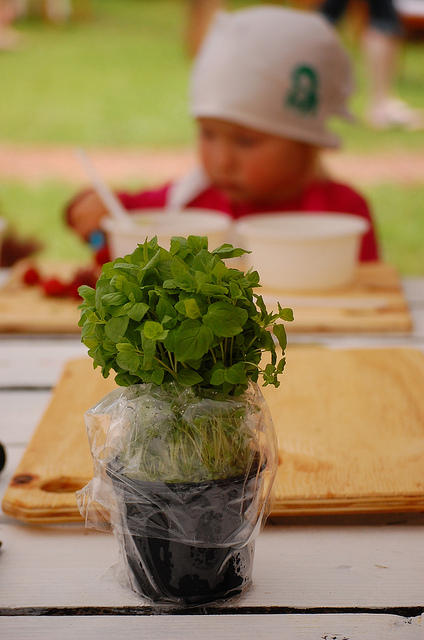
Couple of weeks ago I got a phone call from a well-known journalist and party organiser, asking to give a cookery demo to a group of kids and their parents at a small music festival in a small Estonian town of Kilingi-Nõmme.  The workshop, called Kahviahvi Kokakool ("Fork Monkey's Cooking School", or probably better translated as "Kitchen Monkeys"), was to have four cookery sessions/demonstrations, and I was asked to give one of them. I agreed - it was a chance to get out of town and listen to some nice music in fresh air before and after the cooking demo. We were discussing the possible menu options, taking into consideration what the other sessions were focusing on, and finally agreed I'd teach the kids and their parents (26 in total) how to make cold soups. Not your usual gazpacho, mind you, but a kefir and a buttermilk soup, respectively - one savoury, one sweet.

It's summer, after all! As it turned out to be a really hot on Saturday (the music festival and the culinary workshops took place on Saturday, July 7th), cold soups seemed to have been a wise choice indeed :)


My cold summer soup workshop was at 5.30 pm, third one of the afternoon:


I tied the apron strings and was ready to begin. Note the sweet monkey-fork/fork-monkey design:


The kids were all anxiously waiting and ready to start chopping:


We began with the savoury kefir soup. Basically we made this chlodnik, but adding beets/beetroots and grated horseradish was optional, and everybody added some cooked mortadella-style sausages as well, to make the soup a bit more substantial. I must admit that about 3/4th of the kids asked for both the beets and the horseradish, which made me very happy indeed :)

Small (and some slightly bigger) kitchen monkeys in action. Note the high concentration of fathers - at least four - who were accompaning their children:


My role was to make sure everyone has understood the instructions and are progressing nicely:


Cutting the sausages into small dice for the soup requires some serious focusing and concentration:
 

Me, making sure that everyone got some vitamin-rich green onions:

Here's a close-up of the cold kefir soup with scallions/green onions, finely chopped sausages, beets and cucumbers (you can only guess there's beetroot at present at this point, as the stirring of the soup was a serious and time-consuming job as well):


Once everyone had finished making and eating their cold kefir soup, it was time to start making the dessert. I had chosen the wonderfully summery Danish buttermilk and strawberry soup koldskål - you'll find the recipe here on Nami-Nami. We did use kama cereal balls instead of crushed biscuits/cookies, however.

The main component - local Estonian strawberries, which are at their peak just now:


Mint, destined as garnish of the cold buttermilk-strawberry soup (lemon balm works just as well)

 Choosing the prettiest strawberries for the buttermilk-strawberry soup:


Here's our daughter (3 y 5 m) enjoying the buttermilk-strawberry soup she made all by herself:


Thank you, Merle Liivak, Kahvliahvi Kokakool & Schilling, for inviting me! I had a lovely day indeed :)

All photos by my food-blogging friend Liina Vahter .
reade more... Résuméabuiyad

Coconut and carrot soup with lime and basil

Kookose-porgandisupp laimi ja basiilikuga / Coconut and carrot soup with lime and basil 
I know, I know. It's summer and you're probably wondering why would anyone write about soothing vegetable soups, no?

Well, here's a flavoursome and vegan and gluten-free soup that'd be perfect for those slightly cooler summer nights that we are (at least here in Estonia) bound to encounter every now and then. It's mostly store-cupboard ingredients, so a lovely stand-by recipe. Somehow the coconut and carrots and basil and lime together are very refreshing, and surprisingly suitable for summer months. We thought it worked also well as a cold soup, but that's up to you.

The recipe is adapted from Lina's Matkasse, a popular Swedish grocery-and-recipe delivery service.

Coconut and carrot soup with lime and basil
(Kookose-porgandisupp laimi ja basiilikuga)
Serves 4 to 6

350 g carrots
1 medium onion
1 Tbsp vegetable oil
220 g red lentils (about 1 cup), rinsed and drained
1 litre vegetable stock
thumb-sized piece of fresh ginger, finely grated
400 ml coconut milk
2 garlic cloves, crushed
1.5 tsp cumin seeds, ground
1.5 tsp coriander seeds, ground
0.5 tsp salt
1 lime, juiced
a pinch of chilli flakes (I used Aleppo chili)
a handful of fresh basil leaves

Peel or scrub the carrots and cut into 1 cm slices. Peel and chop the onion.
Heat oil in a heavy saucepan, add the onion and fry for a few minutes. Add the carrots and lentils and a sprinkle of salt, sauté for another few minutes.
Now add the vegetable stock, grated ginger, crushed garlic, cumin and coriander seeds as well as the coconut milk. Bring into a boil, then reduce heat, cover and simmer gently for 15-20 minutes, until the lentils and carrots are soft.
Process the soup until smooth (I prefer a jug blender, but an immersion blender would work as well). Season to taste with salt, lime juice and chilli flakes.
Garnish with basil leaves and serve.

EDIT November 29, 2012: Lydia Walshin featured this recipe on her SoupChick blog. Thank you, Lydia!
reade more... Résuméabuiyad

Canteen classics: Solyanka, Estonian style

Eestipärane seljanka / Solyanka, Estonian-style 
(This recipe was originally posted in December 2006. Fully updated in May 2012).
 
Here's a recipe for a soup that must have frequently featured in one disguise or another in every single canteen and many households across the former Soviet empire: solyanka (see also this informative article about Russian soups). A hearty soup originally from Russia and Ukraine that can be just as humble or elegant as you want. If you're a flashy Slav, you use seven types of meat (incl. kidneys) and throw in a handful of black olives, a slice of lemon and a generous pinch of capers. If you're a more modest Estonian, you stick to sweating onions and a choice of sausages. You can add cabbage or other vegetables, make a vegetarian, fishy or meaty solyanka.

Whatever you do, you must use salted/brined cucumbers (aka pickles), which give the soup its characteristic salty-sour note.

Solyanka, Estonian style
(Seljanka eesti moodi)
Serves: 4

3 large onions (about 400 grams in total)
4 Tbsp oil
100 ml boiling water
100 grams of concentrated tomato puree
1 litre beef stock (use boiling water and 2 beef stock cubes, if necessary)
3 bay leaves
10 black peppercorns
3 salted cucumbers, halved lengthwise and sliced
300-400 grams of cooked lean meat products (choose a mixture of Frankfurters, Polish kabanos or Krakow sausages, sliced cooked beef, mild chorizo sausages etc - 2-3 different types)

To serve:
sour cream or smetana or thick plain yogurt

Quarter the onions and slice thinly crosswise.
Heat oil in a heavy saucepan, add onions and fry gently for 5 minutes. Add peppercorns and bay leaves alongside 100 ml of boiling water and simmer for 15 minutes, until onions have softened.
Add tomato puree and stir until combined.
Add the hot stockm sliced cucumbers, and chopped meat products.
Bring slowly to the boil, cover, reduce heat and simmer gently for about10 minutes, so the flavours can develop.
Taste for seasoning - you can add some lemon juice to sharpen the soup.Serve with a dollop of sour cream and some rye bread.

More solyanka recipes:
Salmon and wild mushroom solyanka @ Nami-Nami
Frau T's solyanka  @ Urban Foodie
Solyanka @ Eastern Europan Food (About.com)
Russian meat solyanka  @ Food.com
Solyanka @ Pavel Chuchuva (in Melbourne)
Simple Solyanka @ Windows to Russia

reade more... Résuméabuiyad

Christmas Recipes 2011: Curried Parsnip Soup

Curried parsnip soup / Vürtsidega pastinaagisupp
Photo by Andres Teiss

I am not claiming that this curried parsnip soup is a traditional Christmas soup in Estonia or anywhere else in the world. However, after living in Scotland for seven years, I do associate parsnips - at least in their roasted incarnation - with Christmas feasts, and the warming curry spices make it immensely suitable for a lighter (and healthier) festive starter. I've used individual spices - ginger, cumin and turmeric - to spice up this pretty soup, but you can simply substitute your favourite curry powder mix for these spices.

Again, this recipe was one of the six recipes that I was recently asked to develop for a particular supermarket here in Estonia, which are included in their 2011 Christmas Newsletter. The photos for the newsletter were shot by Andres Teiss, and he has kindly allowed me to use those for my blog posts as well.

Curried Parsnip Soup
(Karrivürtsidega pastinaagisupp)
Serves six

Curried parsnip soup / Vürtsidega pastinaagisupp
Photo by Andres Teiss

1 to 2 Tbsp oil
1 large onion, chopped
1 garlic glove, minced
750 g parsnips (peeled weight)
2 tsp ground cumin
1 tsp turmeric
1 tsp ground ginger
1 litre hot vegetable stock
salt and pepper, to taste
fresh coriander/cilantro leaves, to garnish

Cut the parsnips into chunks.
Heat the oil in a heavy saucepan. Add the onion and sauté for a few minutes. Add the garlic, fry gently for another minute.
Add the spices and parsnip, stir to coat evenly with the spice mixture. Pour in the stock, season with salt and pepper. Bring into a boil, then reduce heat and simmer gently for 20-30 minutes, until the parsnip is soft.
Remove the saucepan from the heat. Process the soup until liquified (you can use either a hand-held immersion blender or a liquifier blender). Reheat the soup, season to taste, if necessary.
Garnish with a fresh coriander/cilantro leaves and serve.

Curried parsnip soup / Vürtsidega pastinaagisupp
Photo by Andres Teiss
reade more... Résuméabuiyad

Marika Blossfeldt's 'Essential Nourishment' and a recipe for Kabocha Apricot Soup (book giveaway)


NB! I've got one copy of this wonderful book (in English!!!) to give away to Nami-Nami readers. See details below!

I had seen the Estonian version of this book at my friends' place, and loved it. So when Marika, who divides her life between Estonia and New York, and whom I've met couple of times, asked me if I'd love a copy of the English version, I said yes. The book's full title is "Essential Nourishment: Recipes from My Estonian Farm. Your feel-good guide to healthful eating and energized living, one delicious meal at a time". It's divided into three major sections - Nutrition and Nourishment; Lifestyle; Food Guides and Recipes. Marika has been trained in integrative nutrition - meaning a reasonable and wholesome approach to eating and living healthily, and the resulting combination of information on nutrition and a collection on recipes is excellent.

I've got my own favourites - her beet, fennel and quinoa salad is wonderful, as is the recipe for Rye Porridge with Sesame Seeds. Our good friends regularly make her Zucchini Walnut Muffins and Carrot Ginger Soup (I'm especially partial to those muffins - our friend Peter bakes them in mini muffin tins, and they're addictive!) There are several healthy- and delicious-sounding recipes I'm looking forward to trying as soon as the festive season is over - Polenta with Roasted Sunflower Seeds, Quinoa Pilaf with Shiitake Mushrooms, Dandelion Greens in Creamy Sesame Sauce, Chickpeas with Sweet Potatoes, to give you just an idea.

But when I asked Marika which recipe she'd like me to share with my many American readers, she suggested this nourishing soup. Hope you'll enjoy it - and why not serve it as a starter this Thursday?


Kabocha Apricot Soup
serves 6

What could be a better treat than a squash puree soup on a chilly autumn day? Although the original recipe calls for kabocha squash, any winter squash or pumpkin can be used. The dried apricots add a little twist of sweet and tart and a hint of sophistication.

1 kabocha squash, about 2 pounds (1 kg), cut into quarters, seeds and fibrous parts removed
4 cups (1 l) water
1 onion, cut into wedges
12 dried apricots, cut into halves
1 piece fresh ginger, about 2 inches (5 cm) long, sliced
1 tablespoon butter
salt and pepper
2 tablespoons finely chopped scallions

Place the squash in a steamer basket inserted into a large pot. Add 3 cups (750 ml) of the water and steam for 20 minutes. Reserve the cooking water. Place the cooked squash onto a plate to cool. Use a spoon to scrape the meat from the peel.

Boil the onion, apricots and ginger in the remaining 1 cup (250 ml) of water for 10 minutes.

Combine the squash with the onion mixture. In batches, pour into a blender or food processor and puree, adding some of the reserved squash cooking water for a smooth blend.

Return the puree to the pot. Add the butter and bring to a boil. Add more cooking water if the soup is very thick. Add salt and pepper to taste.

Pour into soup plates and garnish with chopped scallions.

ENJOY!

NB! In the month of November Marika offers her book for sale on her website at a discounted rate. You will receive a signed copy and shipping is absolutely FREE in the United States: http://www.marikab.com/store/2021318/product/en
Hint: this beautifully designed cookbook might just be the perfect Christmas present for all your health conscious friends and family members.
European readers, you can order Marika's book on Amazon.co.uk and Amazon.de

Furthermore, I've got ONE copy of this book to give away to a Nami-Nami reader (I'll ship anywhere in the world). To win one, just leave a comment with your name, location and the name of your favourite healthy cold weather dish. I'll randomly choose a winner on Monday morning (November 28th).
reade more... Résuméabuiyad

My favourite beetroot soup, vegetarian borscht

IMG_8446.jpg
October 2011

Here is one of my very favourite soups of all time, which I make about once a month (at least!). It's a vegetarian version of the famous Russian-Ukrainian beet soup, borscht. My version is delicious and heartwarming - brilliant for cold autumn days and dark winter nights. Yet it's light and refreshing enough, so it would also be good during summer. I tend to use sauerkraut during winter and plain white cabbage during summer (and prefer the first one).

Depending how good your knife-skills are, but it could be on your table in about 40 minutes or even less. I use the food processor to shred (or 'julienne') the vegetables.

My favorite beet soup
(Mõnus peedisupp, täitsa lihavaba)
Serves 4 to 6 as a main course


September 2007

400-500 g (about a pound) of beets
2 medium onions
2 large carrots
400-500 g (about a pound) white cabbage or mild sauerkraut
2 Tbsp olive oil
1.5 litres vegetable stock
1-2 Tbsp lemon juice or wine vinegar
sea salt and freshly ground black pepper

sour cream, to serve

finely chopped parsley or dill, to garnish

Peel the beets, onions and carrots. Cut all vegetables into thick matchsticks (you can use a food processor here to speed up the process). If using fresh cabbage, shred it thinly.
Heat the oil in a large saucepan, add carrots, beets, onions and a pinch of salt and saute for about 5 minutes, stirring every now and then.
Add the shredded cabbage or sauerkraut, then pour in the hot stock. Bring to the boil, reduce heat, cover, and simmer on a low heat for about 20-30 minutes, until vegetables are softened.
Season with salt, pepper and lemon juice, keeping in mind that a proper borscht should have a slightly acidic taste.
Serve with a dollop of sour cream (or omit, if you want a vegan soup) and sprinkle with some chopped parsley or dill.
Serve with some crusty (rye) bread.

UPDATE 21.9.2007
Hedgehog made this soup, too - check out her post here.

NOTE: This soup recipe was originally posted in September 2007. It's been fully revised and updated in November 2011.
reade more... Résuméabuiyad

Meatless Monday: Chickpea and Tomato Soup with Pimentón

Chickpea, pimentón and tomato soup / Tomati-kikerhernesupp, kergelt suitsune

I needed to look up some Portuguese recipes for a friend last weekend and obviously I turned to the very helpful Leite's Culinaria website. I did find the recipes I was looking for, plus a lot more. One of them was this simple, yet delicious soup recipe, originally from Tamasin Day-Lewis's book "Supper for a Song: Creative Comfort Food for the Resourceful Cook". I've adapted the recipe a little to suit our tastes, and we'll be definitely making this again. Puréeing some of the chickpeas/garbanzos to thicken the soup was a neat idea, and you can add more or less pimentón (aka smoked paprika) depending on the freshness and strength of your paprika powder.

While it's filling, it's also gluten-free and vegan, so perfect recipe for a Meatless Monday.

Chickpea and Tomato Soup with Smoked Paprika
(Kikerherne-tomatisupp, kergelt suitsune)
Serves four

1 Tbsp extra virgin olive oil
1 red onion, finely chopped
3 garlic cloves, finely chopped
2 celery sticks, chopped
2 Tbsp chopped fresh rosemary
400 g can tinned chickpeas/garbanzo beans, drained
1 tsp Pimentón de la Vera (smoked paprika)
2 bay leaves
1 Tbsp tomato paste
400 g can chopped tomatoes
1 litre of hot vegetable stock/bouillon
sea salt and freshly ground black pepper
some parsley leaves, to serve

Heat olive oil in a large saucepan. Add the onion, garlic, celery and rosemary and fry for a few minutes, until the aromatics are beginning to soften.
Add the chickpeas, smoked paprika, bay leaves, tomato paste and chopped tomatoes. Give it a stir and bring into a boil.
Add the stock, season with salt and pepper and bring into a boil again. Then reduce the heat, cover and simmer for about 10-15 minutes.
Remove the bay leaves.
Using a hand-held/immersion blender, purée some of the soup, leaving some of the chickpeas whole.
Divide between warmed soup bowls, garnish with parsley and serve.
reade more... Résuméabuiyad

Estonian zucchini and cheese soup

Courgette and smoked cheese soup / Suvikõrvitsa-suitsujuustusupp

Being one of the very few English-language blogs that focus on Estonian food (among other things), I tend to get quite a few emails with Estonian recipe requests or more general enquiries about Estonian food. Usually they are from people who have visited Estonia and tasted something they liked (KAMA!!!), and are now looking to recreate the dish at home. There are also quite a few expat Estonians writing to ask about dishes their grandmother used to make them in the US/Australia/etc when they were younger. Or people whose fiancée, husband, wife, adopted child, neighbour or best friend is of Estonian heritage and they'd love to make them something from Estonian culinary repertoire to surprise the given fiancée, husband, wife, adopted child, neighbour or best friend. I love those letters!

Here's an email I got last August:

Hi,

I was just searching for Estonian Cheese Soup after hearing it mentioned in this story on NPR. Surprisingly, I couldn't find anything about it, but it brought me to your website and I just spent an hour going through it's great pictures and recipes. Great site!

Do you have any idea on what soup that may be? I'd love to whip one up.

Keep up the great work and thanks in advance for any help or leads you have for me.

Gavin G.


Estonian cheese soup? I was baffled. I wasn't entirely sure there is such a thing. Sure, we make various soups with addition of cheese. I've blogged about a simple goat cheese and beet soup and creamy fish soup that both have some cheese in it. However, there's nothing particularly Estonian about these two soups. So I asked around and it turns out that I'm a lousy pub-goer. You see, many Estonian pubs serve something called cheese soup (juustusupp), apparently. And as I'm more of a café-chick than a pub-girl, I had no idea.

Basically, these are simple soups that have been enriched with either cheese spread (sulatatud juust) or smoked cheese (suitsujuust). Back in August, when I was trying to come up with a soup recipe for Gavin, I made this courgette/zucchini soup with smoked cheese (the type of smoked cheese we use in Estonia looks like this:
 
It weighs 280 g and contains 18% milk fats) and is nowadays produced by Tere AS.

I hope you'll enjoy this, Gavin!

Courgette and Smoked Cheese Soup, Estonian style
(Suvikõrvitsa-suitsujuustusupp)
Serves four

Zucchini and smoked cheese soup / Suvikõrvitsa-suitsujuustusupp

a dash of olive oil
1 onion
1 large potato
1 medium green zucchini/courgette
1 litre hot vegetable or chicken stock
280 g smoked cheese (preferably Estonian)
salt and freshly ground black pepper
parsley and croutons, to serve

Peel the onion and potato, chop finely and sauté in some oil for a few minutes. When the potato is slightly golden, then add chopped-up zucchini/courgette (no need to peel). Heat for a few minutes, stirring every now and then.
Add the hot stock. Bring to the boil, then reduce to the simmer and let it bubble until the vegetables are soft.
Blend until smooth, adding the chunks of smoked cheese to the soup while doing this.
Re-heat gently, season to taste.
Garnish with crispy bread croutons and a parsley leaf.
reade more... Résuméabuiyad

Chickpea and tomato soup with Moroccan spices

Moroccan chickpea soup / Maroko kikerhernesupp

Here's a delicious chickpea/grabanzo soup recipe adapted from this book by the lovely Irish chef, Rachel Allen. It's quick, flavoursome, vegan and gluten-free (unless you serve it with crispy bacon or some herb croutons) and easy to make. It's been a while since I made it - seeing one of the few Estonian male foodbloggers making this the other day (check out the video!) - brought it back to our table. Our daughter loved it, K. loved it, and I loved it - so it's definitely a keeper. Hope you enjoy it, too!

I used canned chickpeas - dried ones are much harder to come by here in Estonia. If you prefer using dried chickpeas, then take 150 grams of pulses, soak them overnight in cold water and then boil in unsalted water for about half an hour.

Moroccan chickpea and tomato soup
(Maroko kikerhernesupp)
Serves four

Moroccan chickpea soup / Maroko kikerhernesupp

2 Tbsp olive oil
1 large onion, peeled and chopped
2 celery sticks, chopped
salt and freshly ground black pepper
2 tsp cumin seeds, slightly crushed
400 g can of chopped tomatoes
a generous pinch of sugar
400 g can of chickpeas, rinsed and drained
600-750 ml vegetable or chicken broth
juice of half a lemon
2 Tbsp fresh cilantro/coriander or parsley

Heat the olive oil in a saucepan. Add the onion and celery sticks, season with salt and pepper. Cover the saucepan with a lid and sauté over low heat for about 10 minutes, until the onion and celery are soft, stirring every now and then (do not burn!)
Add the cumin seeds, fry for another minute to release the aromas.
Add the tomatoes, sugar, chickpeas and hot stock. Simmer on low heat for 5-10 minutes.
Season with lemon juice, stir in the chopped herbs and taste for seasoning. Serve.
reade more... Résuméabuiyad

Salmon and Mushroom Solyanka (a thick Russian soup)

Salmon and mushroom solyanka / Seene-lõheseljanka

If you look around Estonian foodblogs, then we all seem to feast on thick and filling Russian-style mushroom soups at the moment - Tuuli has been cooking up mushroom borscht and mushroom rassolnik, Aet has a mushroom solyanka simmering in her saucepan. We had friends over for dinner last night, and as I had got a large bowl of blanched and slightly salted wild mushrooms from K's mum yesterday morning, and made a Russian-style mushroom soup as well, but with addition of fish.

You'll get a best result if using various wild mushrooms. Gypsy mushrooms (Rozites caperatus; kitsemamplid), Russula-mushrooms, Lactarius-mushrooms - all would be perfect, but cultivated mushrooms would work as well (perhaps a mixture of white mushrooms and shiitake mushrooms for some texture?). I had mainly meaty Lactarius scrobiculatus mushrooms (võiseened/kollariisikad)*, with an odd Russula thrown in.

Check your mushroom guide for instructions (some mushrooms - like gypsy mushrooms and many Lactarius-mushrooms can be cooked fresh, some need to be blanched first.

* Note that Wiki considers this an inedible mushroom (well, "Western authors" do). It's much liked over here for its meaty texture and characteristic flavour. It does need to be thoroughly blanched and cooked first, however, and smaller mushrooms are preferred to larger ones.

Mushroom and Salmon Solyanka
Serves four to six

Mushroom and salmon solyanka / Lõhe-seeneseljanka

1 large onion, peeled and chopped
about 400 g fresh (wild) mushrooms - pre-blanched, if necessary
2 Tbsp rapeseed or olive oil
3 Tbsp concentrated tomato pureé
1 litre fish stock
4 medium-sized potatoes, peeled and chopped
300 g salmon filet, cut into 1 cm cubes
2 small pickled cucumbers, halved lengthwise and cut into slices
2 Tbsp capers
a small bunch of dill
salt
black pepper
lemon juice, to taste

Heat oil in a saucepan, add onion and mushrooms and sauté for about 5 minutes.
Stir in the tomato paste, cook for a minute or two.
Pour in the fish stock, bring to the boil. Add the potato cubes, then simmer for about 15 minutes, until the potatoes are cooked.
Add fish, capers, cucumber slices and most of the dill. Simmer for another few minutes, then remove the saucepan from the heat.
Season to taste with lemon juice, salt and pepper (solyanka needs a slightly sour note!).
Sprinkle some extra dill on top, garnish with lemon slice or wedge and serve.
reade more... Résuméabuiyad